


About Us
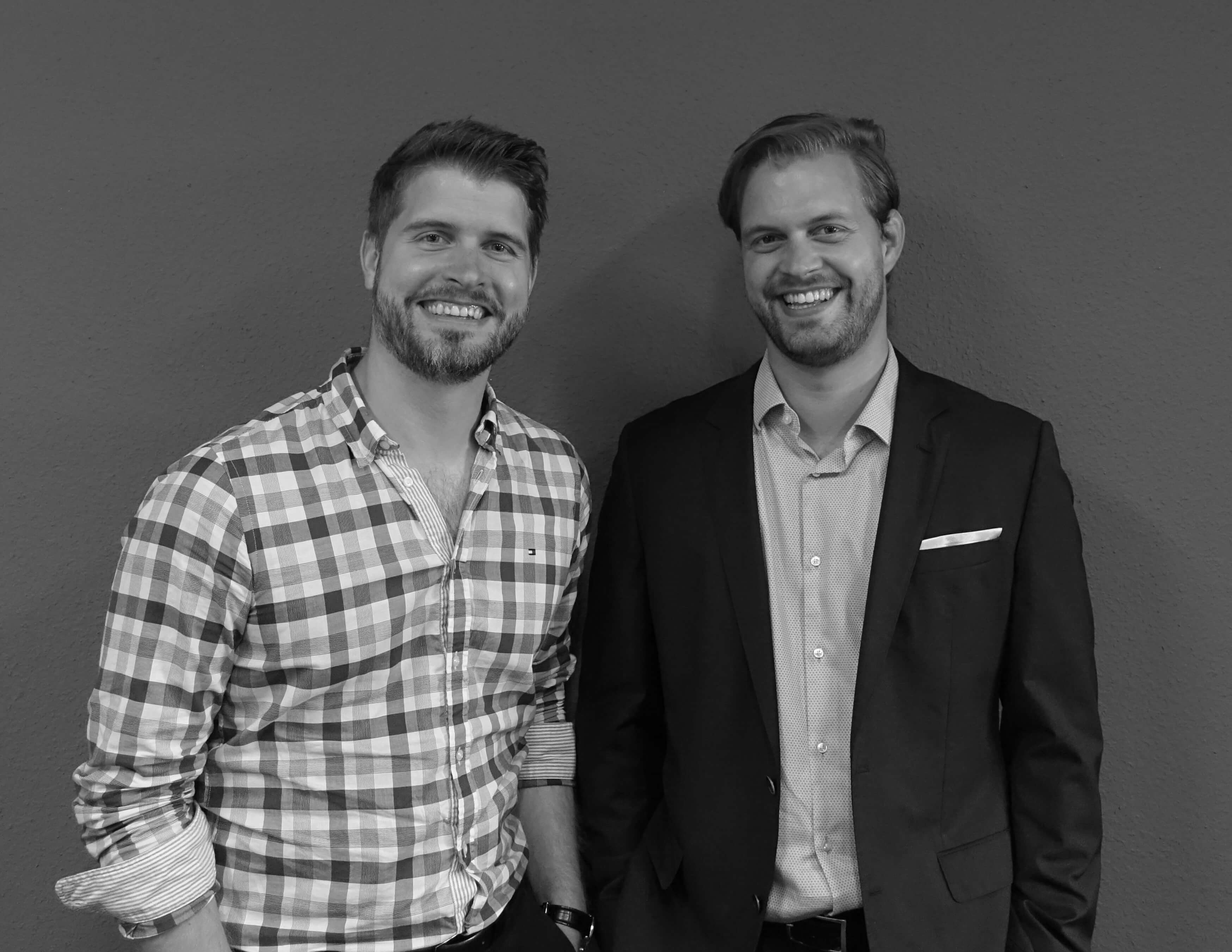
A family-owned business. Second generation, since 2017.
Founded in French-speaking Switzerland in 1995, at the dawn of the internet and file sharing. Taken over in 2017 by the second generation of the family, the company has retained the same clients and continued in the same line of business. We manage the IT operations of Swiss and international companies, from small and medium-sized businesses to large corporations.
We share your challenges, we accompany your changes.
What You'll Find on This Page
Since 1995
Thirty-one years, and not a single reset.
Our first project involved Microsoft Systems Management Server in 1995. Since then, the tech world has changed four or five times; we haven’t changed our line of work or the way we do it. What follows isn’t a corporate story—it’s something you can verify for yourself.
The First Project
Microsoft Systems Management Server, in the early days of the Internet.
Zone21, our first platform
Document Management on SharePoint Server. We’ve been publishers ever since.
The second generation takes over the family business
Acquired, not inherited. Same customers, same business.
Federal License for Labor Leasing
A legal title issued by the federal government, not a label.
Dell Technologies Gold Partner
The equipment is included in the scope: from the workstation to the web datacenter.

The Real Question
Who, exactly, will be working on your project?
At an integration firm with several hundred employees, the case studies they showed you aren’t the people who will actually be working on your project. You’re buying a logo, and you don’t find out who the team is until the kickoff meeting. If the team isn’t as good as the one in the proposal, your project will pay the price.
We’re a company on a human scale, and we stick to that. The experts who will work on your project are the same ones who have already done so for clients of your size and in your industry. Not their colleagues, not subcontractors hired just for the occasion. Them.
We don’t recruit based on volume. We seek out rare candidates who have the technical expertise and the ability to adapt to a field they weren’t previously familiar with. It takes longer to find them. That’s why our clients keep coming back to us.
At a major systems integrator
You make your selection based on the application, and then you get to know the team
- The case studies presented were conducted by teams other than yours
- Consultants change along the way, depending on internal assignments
- Your project is just one of thousands, and its priority is decided elsewhere
- We'll tell you how many people have been certified. You'll only meet two of them.
At our place
You meet with the experts before signing, and they're the ones who come
- The same people from the first workshop through to production
- They have already carried out this project in your industry and on a scale comparable to yours
- You have a single point of contact who makes decisions—not a service center
- We don't go around bragging about our certifications. Instead, ask us about a similar case.
Ask us about a project similar to yours. We’ll put you in touch with the person who worked on it.
Let's talk about your projectOur Standard
This is where we stand firm.
We aim to provide the highest level of quality assurance in the French-speaking Swiss market for our portfolio of solutions. This isn’t something that can be measured by a charter—it’s measured by the phone call we answer, the consultant who stays with you, the quote that holds up, and the conversation we’re not afraid to have. Four commitments—and for each one, the mechanism that makes it sustainable.
Commitment 01
The same team, from the first workshop to the end
Changing consultants midway through a project costs everyone three weeks: the new consultant has to get up to speed on your current situation, and you have to explain it all over again. That’s why we assign people to projects, not projects to schedules.
How WeManageIt: We hire our own employees, and we don’t take on more projects than we can handle with them. When we don’t have the right person, we say so—see Commitment 04.
Commitment 02
A contact person who makes decisions and responds
No service center, no ticket number as your only point of contact, no three-tier escalation process before you reach someone who’s familiar with your case. Direct communication with the person in charge of your project.
How We Do It: A company on a human scale, with three offices in French-speaking Switzerland, and a management team that’s always reachable. Being available isn’t an optional service—it’s what our size makes possible.
Commitment 03
No surprises at the end
The scope, workload, timeline, and deliverables are defined in advance. Anything outside the scope is identified and priced separately; it is not quietly absorbed and then billed. A deviation is obvious; a hidden deviation is discovered too late.
How We Manage It: A written project plan and scheduled deliverables. Depending on the engagement model, any scope creep is borne by us or by you—but it’s always addressed as soon as it arises.
Commitment 04
The Right to Say No to You
Sometimes we say no. No to technology that won’t work for you, no to a timeline that disrupts your production, no to an assignment we wouldn’t be able to carry out. It’s unpleasant to hear at the time—and that’s exactly what saves you from a failed project.
How We Do It: We thrive on successful projects, not signed purchase orders. Honesty and trust aren’t just values we pay lip service to—they’re the only model that has worked for us since 1995 with the same clients.
And just to make the boundaries clear from the start: listening to your needs, inspecting the existing property, preparing a detailed quote, and responding to a request for proposals won’t cost you a thing. Audits, design studies, and architectural schematics, on the other hand, are part of the scope of work. We’d rather state this here than let you figure it out on your own.
Our Mission, in a Nutshell
How our experts get here—and why they stay.
We just promised you that the same people who worked on the first workshop would be involved through to production. Here’s what makes that promise possible. It’s not just a matter of passion: without this framework, it wouldn’t last two years.
These six roles have one thing in common, and it’s the most important point in this section: all require a proven level of expertise. This isn’t just for show—it’s the fundamental prerequisite for what we promise you: the same people from the initial workshop through to production. A company that hires early-career professionals has to rotate them, and that’s what causes teams to change during a project.
We do not hire based on volume
An integrator that recruits in bulk can announce a certain number of certified professionals. It cannot promise you who will actually join. We do the opposite: we seek out rare talent—people with the technical expertise and the ability to adapt to a field they weren’t familiar with before—such as logistics within a corporate group, compliance at a bank, or the fast-paced environment of a hospital.
It takes longer to find the right person, and that’s why we turn down certain projects rather than assign someone who isn’t quite up to the task. Someone who has to learn the ropes on your project ends up costing you more than a higher quote.
What we're looking for, in this order
- A true understanding of a specific scope, not just a list of acronyms
- The ability to hold a meeting with a CFO without using jargon
- The instinct to write down what has been done, so that the next person can find it
- The desire to make what isn't simple seem simple—that's the true test
The framework we provide them with
What Makes Them StayAn expert leaves when they’re bored, not when they’re underpaid. So we provide three things all at once: ongoing training and certifications, significant exposure to complex projects —that is, the real ones, where the client has a problem that no one in their organization has yet solved—and a community where people can ask for help without losing face.
The company’s expertise grows in tandem: whatever one team member learns from a client, the rest of the team incorporates into their methodology. That’s why a project that’s been completed once is executed even better the second time around.
What We're Implementing
- Continuing education and certifications for the portfolio of solutions we offer
- Written work procedures, not an oral tradition
- National and international projects: the scale changes, but the work remains the same
- Communication and teamwork, including between our two departments
We are not computer scientists
We are engineers, architects, analysts, project managers, developers, and integrators. This distinction isn’t just for show: it means that we have people whose job is to understand your business before they even touch a console—and others whose job is to keep to a schedule rather than configure systems.
And here’s a direct consequence that you’ll notice right from the first meeting: we don’t sell hours of discussion. We define a scope, a timeline, and a deliverable.
Our Nine Areas of FocusThree Ways to Get Involved
- Flat-rate service: one coverage area, one price—and we’ll handle the rest
- Under direct management: our experts working within your teams, under your leadership—that is what the federal authorization refers to
- Under a service contract: operations and long-term developments
Proven Innovation
We're not just a systems integrator.
Everyone says, “We innovate.” Here’s the only proof that matters: we’ve been publishing our own software since 2007, and we develop the tools our customers can’t find on the market. Traditional methods are sometimes the best; but you still need to know how to build something when they’re no longer enough.
Software developers since 2007
PublisherIn 2007, we built Zone21: a document management platform built on SharePoint Serverto manage multi-billion projects across Europe. Thousands of documents, authoritative versions, stakeholders in multiple countries, and traceability that must remain intact for years after delivery.
In 2024, NexTeams365 : Managing Microsoft Teams telephony at scale—phone numbers, licenses, calling rules, and activations—is a task that Teams cannot handle well on its own. So we built the tool to do it, and we maintain it.
Seventeen years separate the two. That’s the number that matters: we don’t release a product; we maintain one—versions, version updates, support, and customers who are still using it.
The platform NexTeams365What this says about the house
- A Consistent Delivery Pipeline: Releases, Testing, and Deployment
- Second- and third-level support for the code we write
- Experience with very large volumes of documentation and traceability that must endure beyond the project
- Knowledge of Teams telephonyon the publisher’s side, not just the installer’s
Develop the tool that meets the need
When a customer has a need that the market doesn’t meet, we build it. Form follows function, never the other way around: a web service that exposes your data, an interface betweenERP and CRM, a business application on Power Apps and Dataverse, an automation process that imports a file every morning, bulk processing, or a calculation engine when business rules warrant being isolated.
We also take on legacy applications: those that are still running, that no one knows how to update anymore, and that cannot be shut down.
Our architectural guidelines
- What is specific exists separately: outside the application that uses it, outside the system that consumes its results
- A standalone service is tested, versioned, monitored, and scaled
- It evolves without changing anything else—that's what keeps maintenance costs low ten years later
Anticipate, rather than follow
A portfolio of solutions is not a static catalog: it is built with the understanding that it is meant to support our clients’ business operations. We add a technology when a client needs it and we know how to manage it—not when it becomes trendy.
That’s also why we turned to complementary solutions within the Microsoft ecosystem rather than relying solely on the company’s own products: a customer’s needs rarely end at the boundaries of a single product catalog.
All our technologiesWhere this was observed
- Business telephony, from PBX to cloud, with no disruption for the user
- On-site and cloud—which is the reality for nearly all of our clients—
- Contact centers on Teams, along with certification models that few integrators explain
- Dell hardware, sized and prepared — Autopilot, Intune — before you even open the box at home
Awards and Partnerships
What we own, and who we work with.
These are two different things that are often confused: a title is something you hold and verify, while a partnership is something you build. We hold two titles, and we work with the manufacturers and publishers whose products we integrate—the latter are shown in gray because they are the names of those companies, not titles we hold.


We are Microsoft Solutions Partnerat the highest level of the program. We were already there when it was called Microsoft Gold Partner: Microsoft overhauled its partnership program and renamed its tiers, and we kept pace without ever dropping a level. Sixteen consecutive years at the top, under two successive names.
We have also been Dell Technologies Gold Partner since 2023, from the workplace to datacenter. These titles aren't just claimed—they are earned through proven skills and verified achievements.
We have also helda federal authorization for staff leasing since 2018. This is a point worth reading carefully: this authorization certifies a service provider that assigns its own employees to your projects, whether on a time-and-materials or fixed-price basis. This is not a consulting designation, and it’s precisely the difference between someone who simply hands you a report and someone who stays with you until the project goes live.


Close to you
Three agencies, all located in French-speaking Switzerland.
This isn't just a minor detail on an organizational chart. Someone who can be at your doorstep within an hour doesn't think like a service center located four countries away—and on the day of a production switchover, that difference is immediately apparent.
Headquarters
Renens
Canton of Vaud
The company’s headquarters: management, administration, and most of the engineering teams. This is where projects for the Lake Geneva region are launched.
+41 21 806 37 15Agency
Sion
Canton of Valais
For customers in Valais, we offer on-site service instead of having to travel from Lausanne. The same teams, the same methods—and an hour less driving time.
+41 27 552 00 22Agency
Châtel-Saint-Denis
Canton of Fribourg
Between Vaud and Fribourg, at the border between the two cantons. The same address for businesses in the Veveyse, the Gruyère, and the Fribourg region.
+41 26 322 59 05
Are you an engineer, analyst, or project manager?
This page also describes an employer.
We hire few people, and we hire for the long term. That’s the price of the promise we make to our clients: the same team from the initial workshop through to production. I might as well tell you right away what that entails—and what it means for you.
What You'll Find—and What You Won't Find
- Complex projects for real clients, from the initial workshop to production launch
- Continuing education and certifications, based on a managed portfolio rather than the entire market
- A company where management is accessible, and where everyone knows who does what
- No twenty-level pyramid, no invoices to fill out: you won't be just another line on the schedule
We’re looking for technical expertise and the ability to learn a new field. If you have only the former, the interview will be brief; if you have both, feel free to contact us even if there are no open positions.
To take a closer look
Now that you know who you're talking to.
A presentation alone doesn't prove anything. What follows, however, does: what we take on, what we've delivered, and the tools we use to do it.

Let's talk about it
You know who we are. Tell us what you need to do.
We’ll provide a quote free of charge—coveringscope, workload, timeline, and deliverables—with no obligation on your part. And if you’d like, we’ll connect you with someone who has led a project similar to yours—and you can verify this with just one phone call.
We share your challenges and support you through change.
Renens · Sion · Châtel-Saint-Denis — since 1995