


Audiocodes, KEMP, Fortinet, Zyxel network device management with Ansible
There are hundreds of tools that make your network operation life easier, one of the most popular tool is Ansible (open source). Let us give you an example on how to can use Ansible to automate Audiocodes, KEMP, Zyxel or Fortigate devices backups.
You may have pure Ansible installation or Ansible Tower on top. Tower allows you to manage your playbooks in a Visual Web GUI, create workflows, set credentials and schedule jobs to run regularly.
AWX / Ansible Tower
AWX is a free version of Ansible Tower from RedHat:
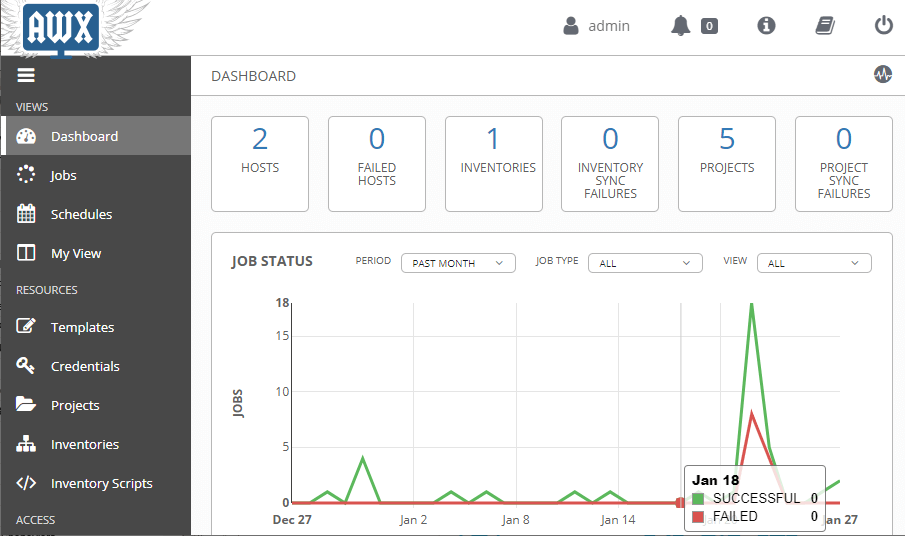
It uses docker container images and can be deployed on various platforms, here is a CentOS v7. Once deployed there are containers running tasks, web, Database, queue and cache:
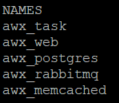
As docker images are maintained by RedHat, you do not need to go deep into how it works, but just profit from nice web GUI and start your development.
So, we want to create a job and template to backup , Audiocodes SBC – The it will be based on a playbook (YAML Ansible code)
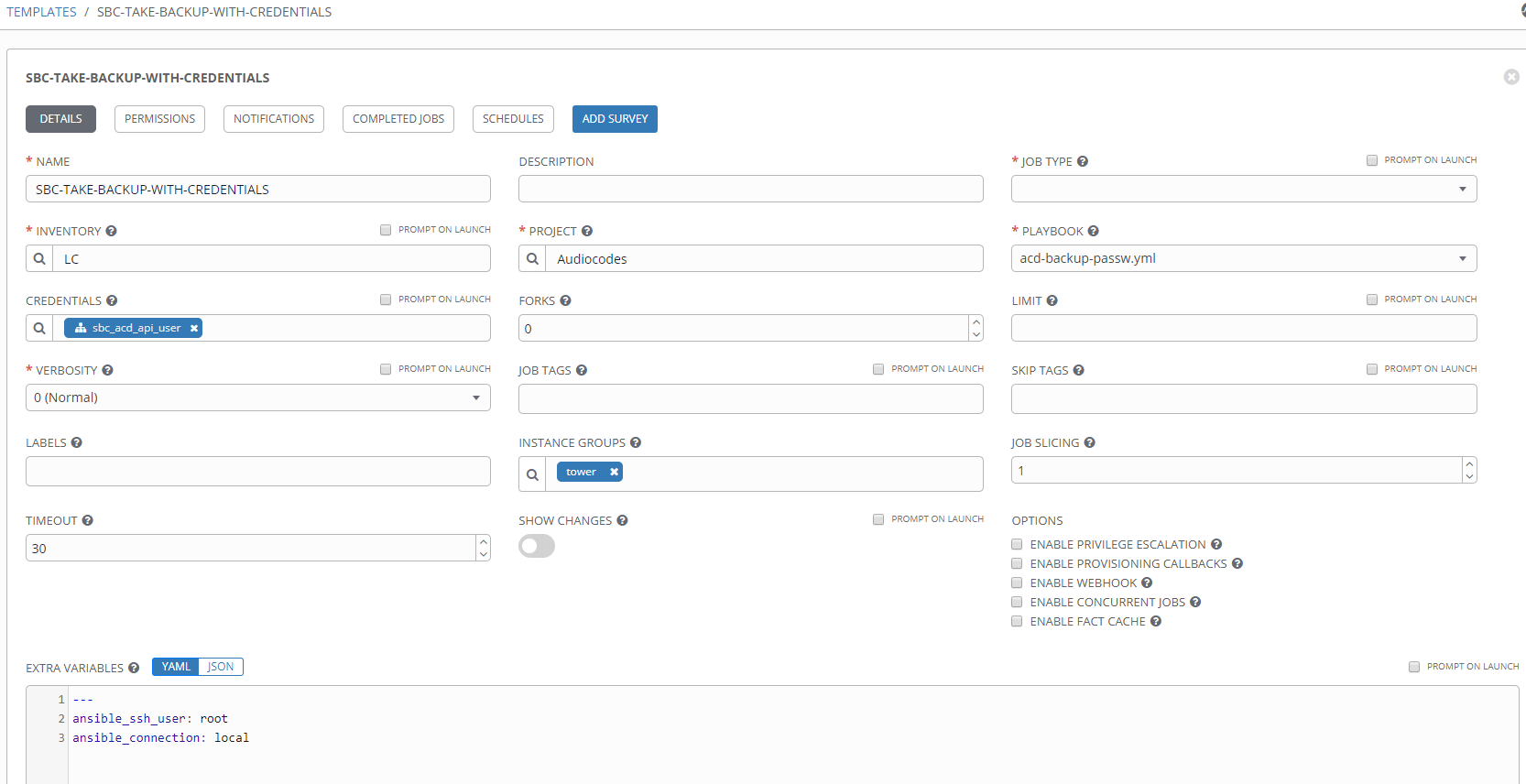
The playbook code may look like this:
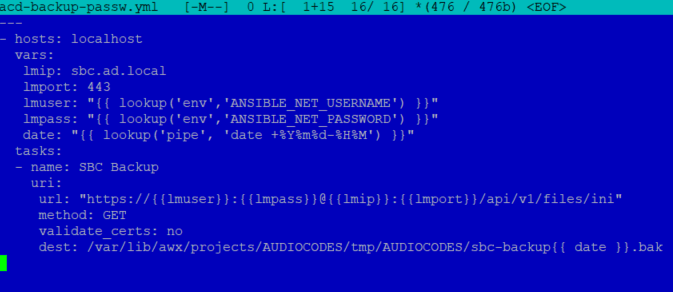
It opens Audiocodes SBC via REST API with a predefined user (we store credentials securely in the AWX database, not in plain text YAML) and saves SBC backup an .ini file in a folder and adds a timestamp to the filename. The API information from Audiocodes can be found here: https://www.audiocodes.com/media/13528/rest-api-for-mediant-devices-ver-72.pdf
Workflows in AWX
In AWX we can create more complex workflows in a visual way:

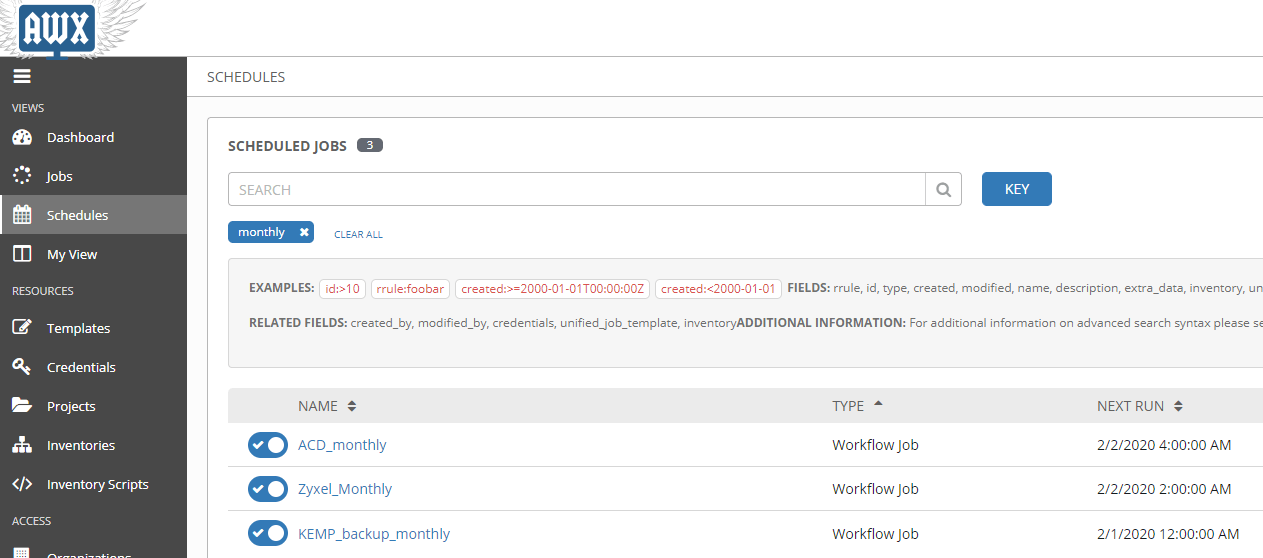
Here is an example of taking a back backup , and then copying the file to a NAS for long-term storage and retention. Finally, we will schedule this job to run on a monthly basis. If the job fails, we can configure the system to send an email to an administrator.
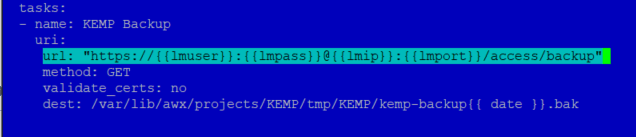
In the same way, we can backup KEMP load balancer:
Gold Zyxel switches

Fortigate REST API requires firmware version 6.x. You can find the necessary information here: https://docs.fortinet.com/document/fortimail/6.0.4/rest-api-reference
Do not waste your time using fortios_config and FW 5.x - it is not very stable method.
The full power of Ansible is scalability, once you have created a unit code for a function you can multiply its use, delegate operation and manage this way many devices. For production use, you obviously need to have isolated DEV and PROD platforms, keep your playbook is an environment with versioning, etc.
Happy DevOps to you!
What an article Can't Know
An article describes what applies to everyone. What varies from one organization to another is the inventory: which applications, which accounts, and which pieces of equipment are actually involved in your organization. The inventory determines the scope of the effort, and it cannot be summarized on a single page.
You'll be speaking directly with the engineers who will be doing the work, not with a middleman. We'll respond within 24 business hours.
Check what is still true
Announced dates are sometimes postponed, products are renamed, and conditions change. The blog tracks these topics over time: when a rule changes, a new post announces it.
Search for a topic in the blogIn the same issue
Three articles on the same topic. The blog has 139 articles, all of which are freely available.