

Artificial Intelligence / Architectures / Platform
A shared artificial intelligence platform, rather than a prototype for each department
Multiple models, multiple use cases, one governance framework, one oversight mechanism, and a single platform.Customer service has its agent, search has its assistant for your documents, production has its camera-based monitoring, and technical management has its code assistant. Four prototypes, four servers, four ways to manage permissions—and no one to coordinate it all. The enterprise platform brings all of this together on a shared infrastructure —on-premises when necessary, at Microsoft when possible—with unified governance, monitoring, and operations.
Three Signs It's Time to Pool Resources
A platform isn't the starting point for an artificial intelligence project. It becomes necessary once several projects have succeeded —and they start getting in each other's way.
Each department built its own prototype
A server ordered by the production team, a subscription set up by customer service, a model installed by a developer on a test machine. Each one works. None of them is backed up, monitored, or maintained by someone whose job it is to do so. The day one of them goes down, we discover that thirty people were relying on it.
Four prototypes, zero in operation.
Rights aren't defined the same way everywhere
The legal department assistant sees documents that the sales assistant shouldn't see, because they have been linked to two indexes created by two different teams. No one can say, for any given person, exactly what all the assistants allow that person to read.
A right is decided once, not once per assistant.
Graphics processors are idle half the time
The production server runs during workshop hours, the research server at night, and the customer service server during business hours. Three servers that are only half-utilized cost more than a single server sized for the entire workload and shared among them. And server sharing requires careful management; it can’t be improvised.
Computing is becoming shared, just as virtualization did.
What a platform brings together, layer by layer
From hardware to use cases, there are eight layers that each prototype goes through on its own—and that a platform builds just once.
The "tinted" layers are the ones that no single prototype builds—and they are what distinguish a platform from a collection of servers. They are designed together, starting from day one.
The use cases that a platform supports collectively
They are the same as the ones elsewhere on these pages. The difference is that they share the same base —and the fifth one costs a fraction of the price of the first.
Privately Housed Business Assistant
One assistant per rights scope, all powered by the same models and the same index.
As Close as Possible to Your DataPrivate RAG
Multiple confidential corpora, a single document search engine, and consistent rights across all of them.
Documents and AutomationIntelligent Document Processing
Accounting invoices and legal contracts are processed by the same workflow, with two different sets of permissions.
Customer serviceCustomer Service and Contact Center
The set agent and the in-house assistant share the knowledge base and correct each other's work.
Private Development Assistant
The code model shares the graphics processors with the other instances during the hours when they are idle.
Camera-Based Quality Control
Inference on the edge, model training, and the model lifecycle on the central platform.
What Keeps a Business Platform Running
Technology comes last, and a platform brings many technologies together. We put it all together, based on what needs to stay on your premises and what can be hosted by Microsoft.
Dell AI Factory with NVIDIA
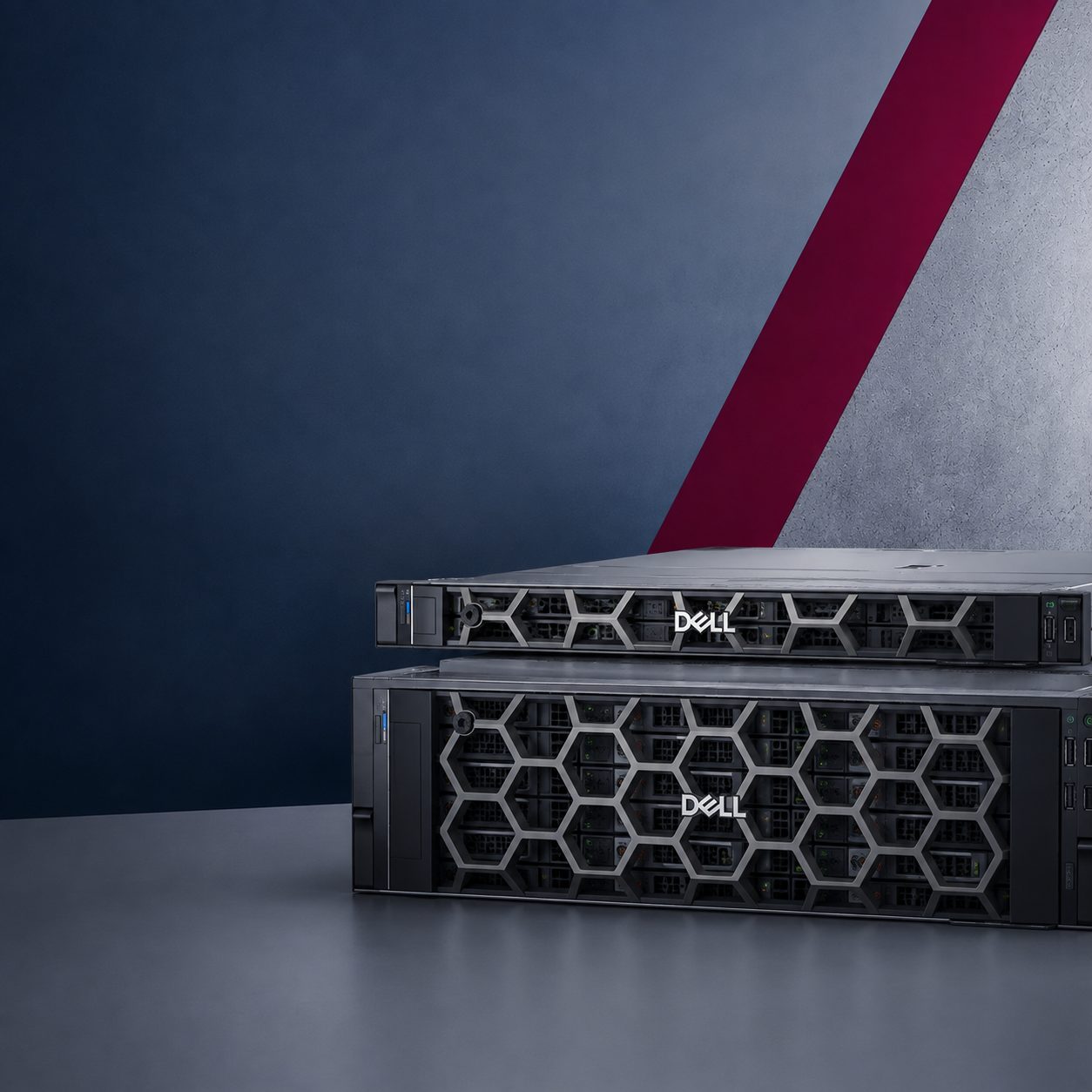
Dell Technologies 's program combines PowerEdge servers, NVIDIA graphics processors and software, storage, and networking in validated architectures—ranging from general-purpose servers with one or two accelerators to the XE series, designed for multiple graphics processors and optimized cooling. NVIDIA enterprise software is available through Dell, along with its services.
What this means for you: a configuration validated by the manufacturer rather than assembled on a case-by-case basis, and a single point of contact from design to support—us.
Azure Local and Azure Arc
The Microsoft foundation in your datacenter, on validated Dell hardware, managed from Azure : the same policies, the same logs, and the same updates for both on-premises and Microsoft-hosted environments. This includes offline operations, subject to certain conditions.
Kubernetes, Foundry Local, and open-weight models
Kubernetes distributes computing across nodes and runs multiple models side by side. Foundry Local on Azure Local—currently in preview at Microsoft—provides the Microsoft model catalog and multi-node scheduling. Open-weight models are used when required by the task’s size or domain.
Microsoft Foundry, Copilot Studio , and Agent 365
As for the part that resides at Microsoft: the template and agent platform, the creation of agents with defined scopes and permissions, and enterprise-wide agent governance. The enterprise platform does not pit on-premises systems against Microsoft; rather, it governs them together.
Entra ID, Dell storage, data protection
Unique identity, file and object storage for millions of index fragments, and backup that restores an index or template in the event of an incident. These are the layers that a prototype overlooks but that a platform cannot afford to overlook.
Dell AI Factory with NVIDIA architectures, Azure and the capabilities of Foundry Local are documented by Dell Technologies , and Microsoft, and are re-verified before each proposal. No performance figures or prices are listed here: they change every quarter.
What You Need to Know Before Pooling Resources
Four points that distinguish a platform that serves its purpose from one that becomes the fifth prototype.
A platform is justified by its use cases, not by the platform itself
At least three identified use cases—at least one of which is already in production—are the minimum requirement. A platform built “just in case” waits for usage that never comes, and its computing power lies dormant. We refuse to scale it without these use cases.
Governance comes before hardware
Who decides whether an agent can be created, based on what data, using what model, and to what extent it operates: these governance rules are established before the first server is ordered. By then, each department has already fallen into its own routines.
Distributed computing is being piloted
Shared graphics processors require priorities: production control takes precedence over the internal assistant, and customer service takes precedence over nightly analysis. These priorities are determined, configured, and measured. Without them, sharing becomes a queue.
Not everything has to be on your premises
An enterprise platform can include components from Microsoft—Copilot for office tasks, services Azure for document processing—and an on-premises component for confidential datasets and large volumes. Governance covers both. This is often the most cost-effective architecture.
How We Do It
A platform is built on what already exists. The first step is an inventory, not a blueprint.
Inventory of Prototypes and Use Cases
What is already in operation—where, for whom, on what data, and with what permissions. What is planned. What must remain on your premises and what can be stored at Microsoft. And the actual workload for each scenario, as measured.
Governance and Architecture
The rules: who creates, on what, to what extent, and who oversees. Then the layers: identity, orchestration, models, search, and supervision. Finally, the hardware, sized to accommodate the total workload and its priorities.
The Construction and Revision of Prototypes
Once the platform is set up and connected to Entra ID and your systems. Then, existing prototypes are migrated one by one to the common platform, along with their users, without interruption.
Day-to-day operations and the following situations
Updating models, monitoring, costs by service, and reviewing governance. And implementing the following use case, which takes weeks instead of months.
The scope is defined before we begin. This includes what we’ll handle, what you’ll retain, the planned rollback, and the clearly defined limits. The same engineers will support you from the initial assessment through day-to-day operations.
Related pages
The architectures supported by the platform, and the hardware on which it runs.
At Your Premises: What “All Local” Entails
The local component of the platform, and the six things that come with a server.
View the page HybridThe interface is at Microsoft; the data is on your premises
The platform manages the boundary for all cases at once.
View the page Dell Servers PowerEdgeA server scaled to meet the needs of your applications
The scaling chain and the XE series for accelerated computing.
View the page Dell StorageEvery piece of data on the platform that suits it
File and object for corpora and indexes, including what the reduction rates entail.
View the page Dell APEXThe pay-as-you-go platform
Subscription and metered usage: when the system must be able to scale up without requiring new investment.
View the page Your ProjectFrom Planning to Day-to-Day Operations
The method that leads from the first use case to the platform, without skipping any steps.
View the pageLet's talk about your platform
Tell us how many prototypes are already in use
What currently exists, what is planned, what needs to remain on your premises, and what is currently supporting all of this. We’ll be back with the inventory we’d compile, the breakdown we’d propose between your premises and Microsoft, and the first prototype we’d build on the common foundation.
What we offer is the opportunity to meet the engineers who will do the work. The assessment, governance, and sizing are all part of the project. The discussion leading up to them, however, costs nothing.
Renens, Sion, Châtel-Saint-Denis
Microsoft Solutions Partner and Dell Technologies Gold Partner. The eight layers of a platform, all with the same point of contact.
Renens VD +41 21 806 37 15
Sion VS +41 27 552 00 22
Châtel-Saint-Denis FR +41 26 322 59 05